


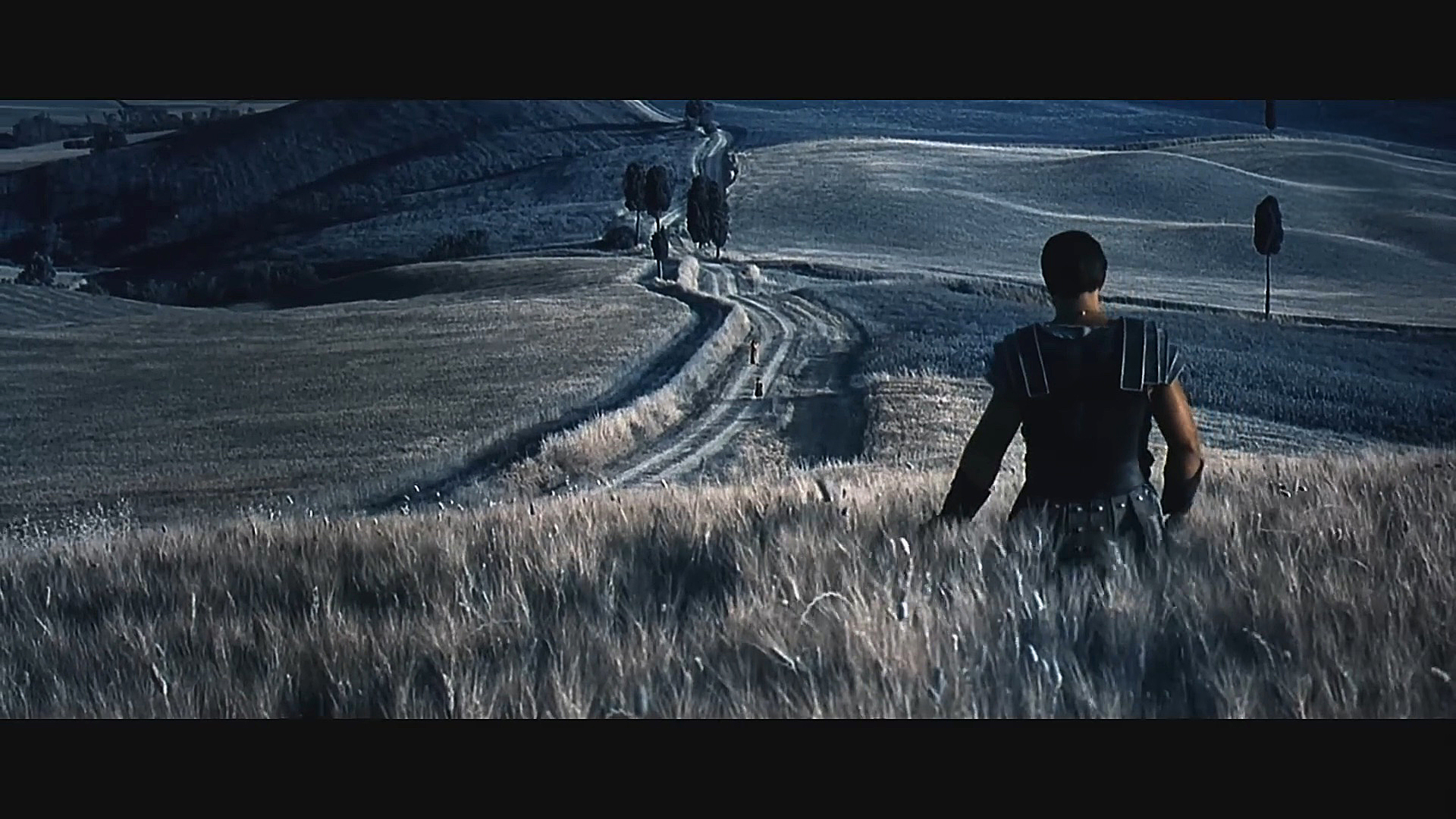
In 2000, Ridley Scott chose the landscapes of the Val d’Orcia to give Maximus one of the most unforgettable endings in cinema history.
Like many people, I already knew these images by heart. The golden hills, the cypress trees, that unmistakable Tuscan light… I thought I was coming to see a movie set.
But once I arrived, something shifted. The film slowly faded away. The landscape took over.
Among these UNESCO World Heritage hills, I felt something strange. Something silent, almost unreal. Not something you see. Something you feel.
Some would call it magic.
I simply call it Mana.
Elysian Fieds, Along Gladiator's Iconic Road
There are places you discover by chance.
And there are places you’ve dreamed of visiting for years. The hills in the movie Gladiator belonged to the second category.
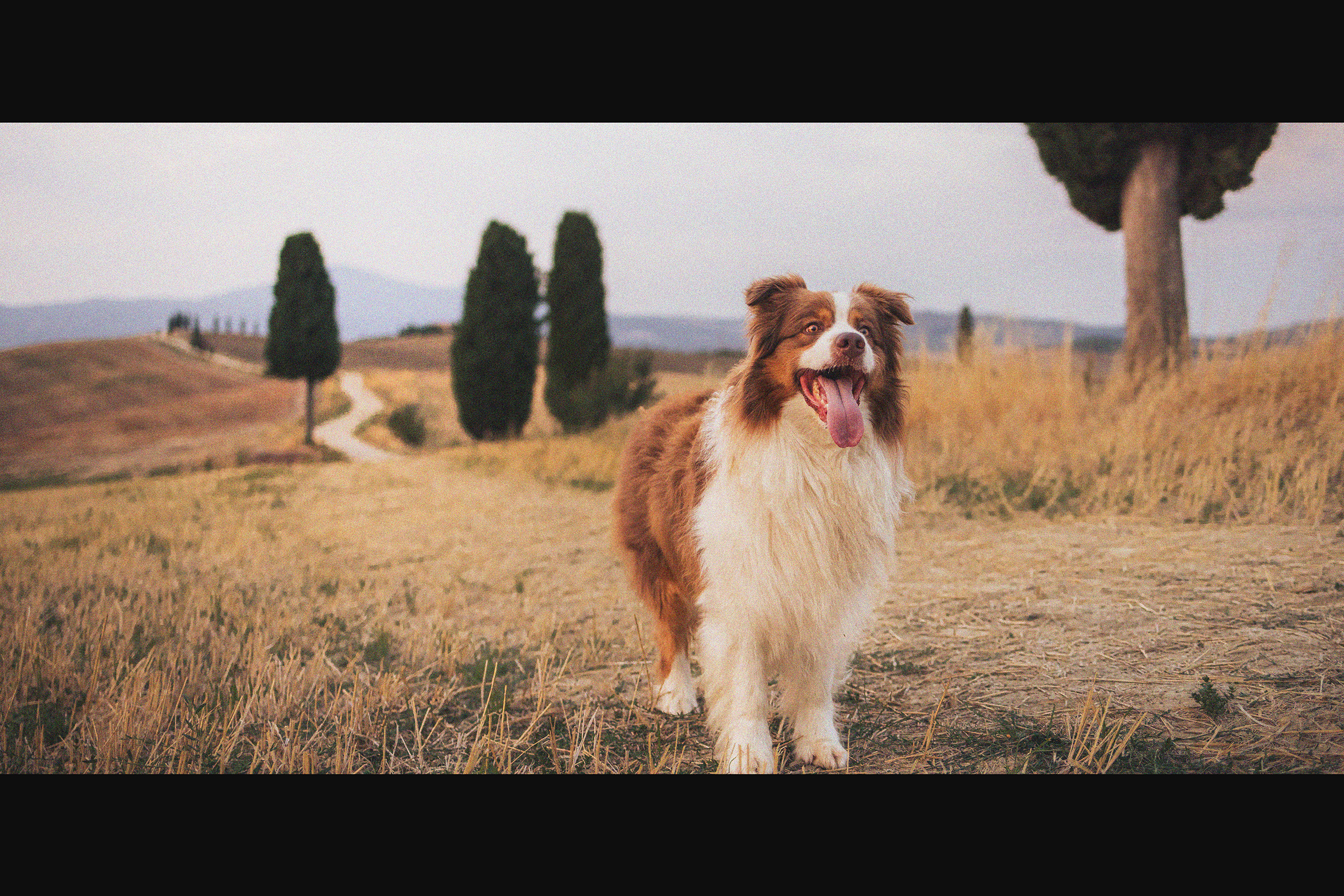
After parking the car in Pienza, there was no way I could walk calmly. My dog Mana was already running ahead, unable to contain his excitement. We were still a few hundred meters from the location, but in my mind, the film had already begun.
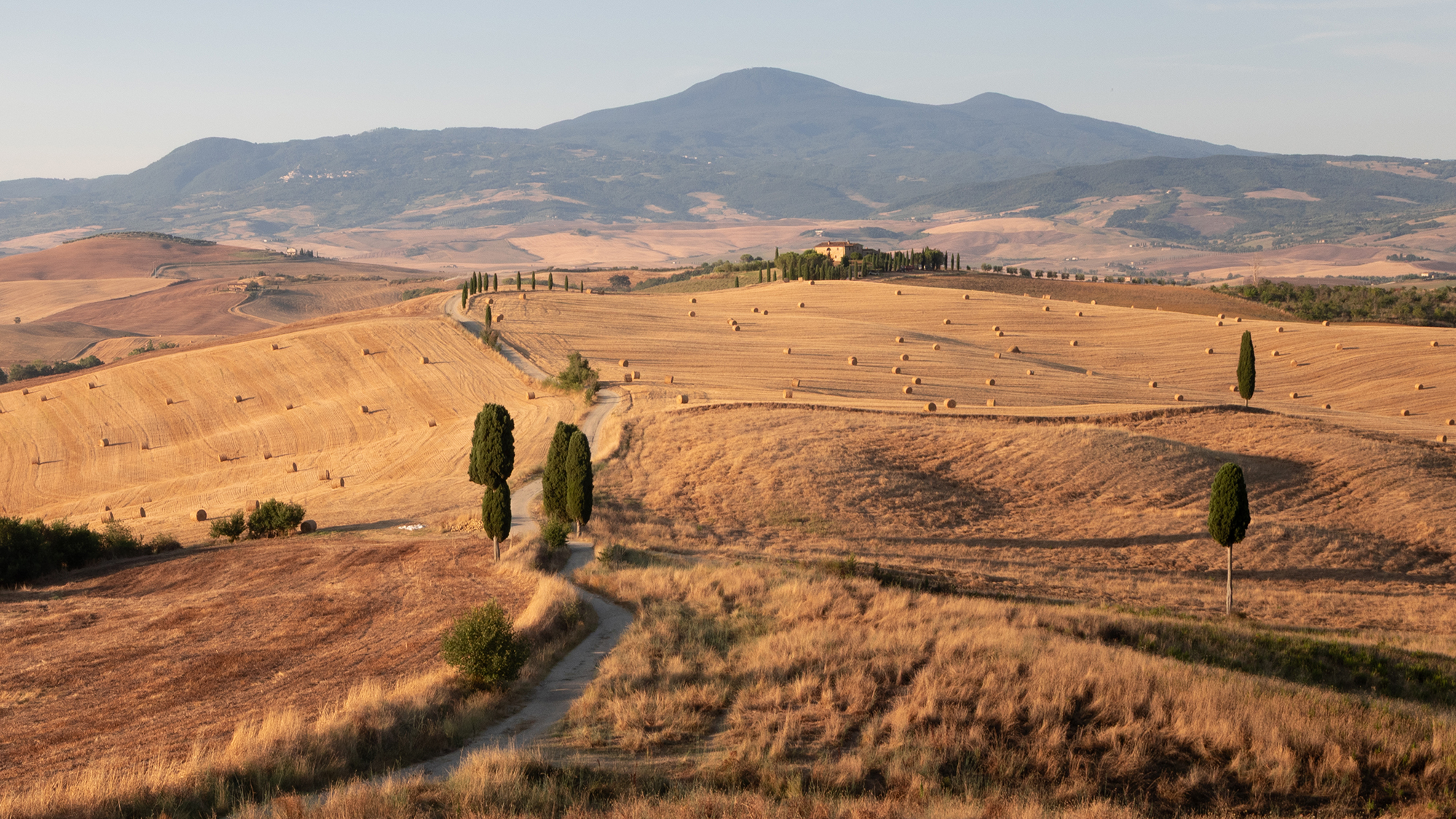
A dirt path winds gently between a few trees. You keep walking without really knowing when the view will reveal itself. Then one last bend… And suddenly, everything opens up.
The hills of the Val d’Orcia appear all at once. In the distance, Mount Amiata dominates the horizon.
It hits you.
I stay there for a few seconds without saying a word.
The soundtrack of Gladiator begin to play in my head.
Cicadas sing endlessly. A light breeze ripples through the dry summer wheat. Birds drift across the sky. Meanwhile, Mana is already running through the tall grass.
At that moment, it becomes impossible to tell where the movie ends and Tuscany begins.
Climbing the small embankment, you arrive at the exact spot where Ridley Scott filmed Gladiator‘s most iconic scene: Maximus slowly walks through the wheat before reuniting with his family.
ROADBOOK: The closest parking area is at the entrance to Pienza, about 1 km from the filming location (see map below).
A small road leads closer to the site near the Pieve dei Santi Vito e Modesto, but it is reserved for local residents. Please respect this restriction to help preserve the peaceful atmosphere of the area.
Maximus' House in San Quirico d'Orcia
A few kilometers further, at the entrance to San Quirico d’Orcia, another iconic Gladiator location appears. An old gate. And behind it… A long avenue of cypress trees. Perfectly aligned, almost standing at attention like an honor guard guiding your eyes toward the house.

Naturally, Mana couldn’t resist. Within seconds, he had already found a way inside. There he stood, right in the middle of the avenue. Perfectly still. Eyes fixed straight ahead. Completely convinced he had become a Roman guard protecting Maximus’s home. I didn’t have the heart to tell him that his shift had ended nearly two thousand years ago.
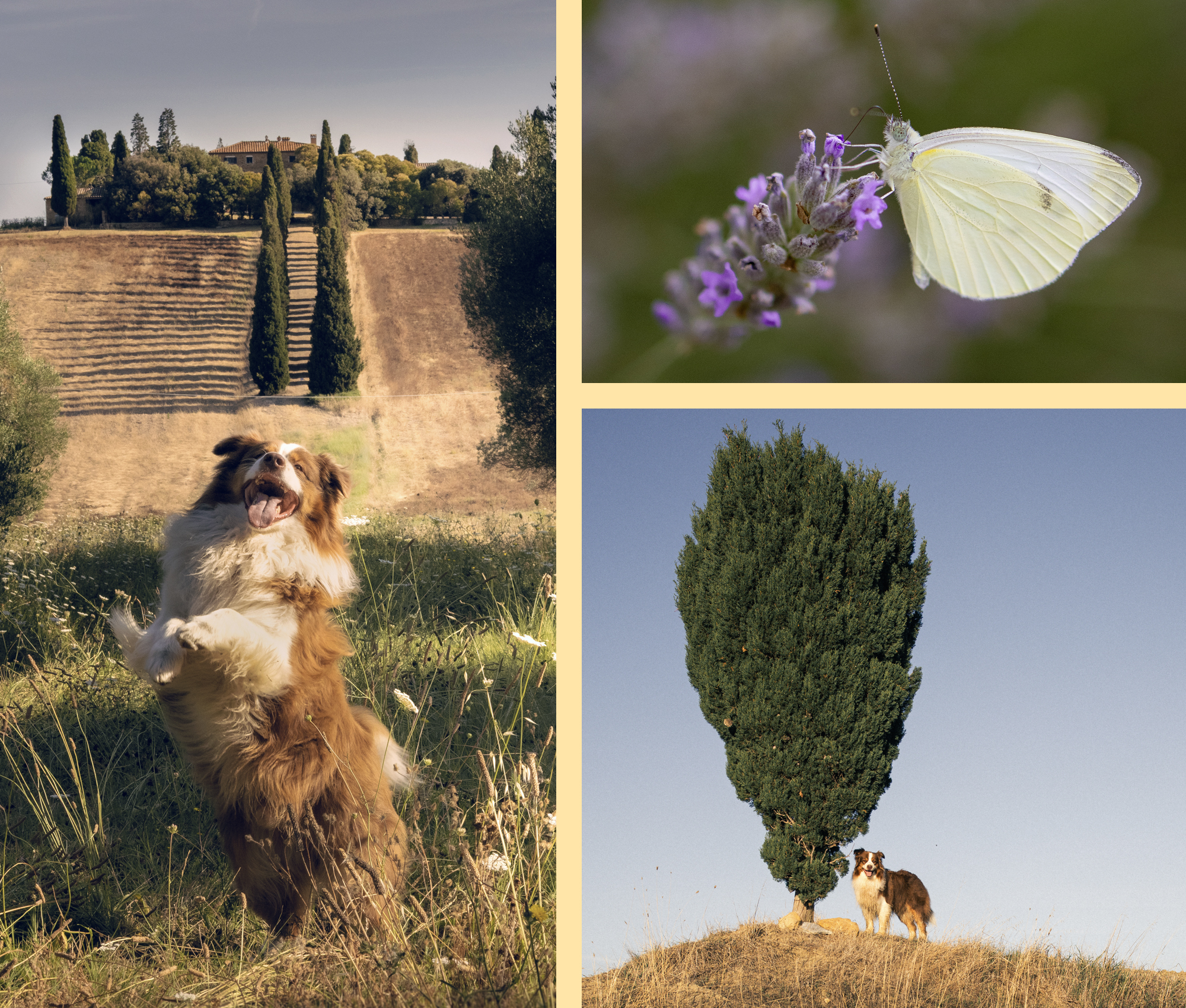
ROADBOOK: Maximus’ house is Podere di Poggio Manzuoli, at the entrance to San Quirico d’Orcia. You can park right in front of the entrance (see map below).
A Film Set… or Something More? As I was leaving, I turned around one last time to look at those hills. I thought I was coming to see a filming location. Instead, I left with the memory of a moment. Maybe that’s why Gladiator still moves us today. Because long before it became a movie set, Val d’Orcia was already a place where time seems to slow down.
A place where, for a few moments, everything else simply disappears.
ROADBOOK
ROADBOOK
Places That Left a Mark on Me…
Places That Left a Mark on Me…
Where Mana Is
Visual artist and traveler.
In search of places that radiate a unique kind of magic.
Some call it mana.